


ASUS TUF Gaming A16 (FA608) vs Razer Blade 16 (2026)
The Blade 16 is the better choice for gaming. It plays games far better, it has an OLED screen and its screen is sharper. The TUF Gaming A16 makes more sense if you want to add memory later.
We earn a commission from qualifying Amazon purchases made through our links, at no extra cost to you. This never affects our specs. How we make money.
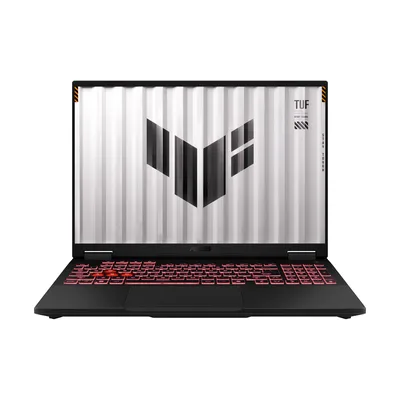
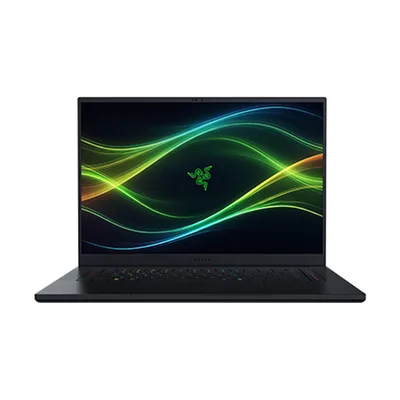
Key differences
- Gaming Blade 16 wins
The Blade 16, with its RTX 5080, plays the latest games at max settings, while the TUF Gaming A16, with its RTX 5070, plays modern games at high settings.
- Screen Blade 16 wins
The Blade 16 has an OLED screen, with true blacks and rich colour, while the TUF Gaming A16 has an IPS panel. Dark scenes in films look far deeper on the OLED.
- Sharpness Blade 16 wins
The Blade 16 has a noticeably sharper screen, so text looks crisper and you can fit more on screen comfortably.
- Memory Blade 16 wins
The Blade 16 has 32 GB of memory, while the TUF Gaming A16 has 16 GB. That helps when you keep many apps, tabs or big projects open.
- Upgrades TUF Gaming A16 wins
Only the TUF Gaming A16 lets you add memory later, up to 64 GB. On the Blade 16, what you buy is what you keep.
- Smoothness Blade 16 wins
The Blade 16 has the smoother screen, 240Hz against 144Hz, so fast games look smoother and feel more responsive.
Which one should you choose?
Choose the TUF Gaming A16 if…
- you want to add memory later
- you want a wired connection
Choose the Blade 16 if…
- you want new games at higher settings
- you watch a lot of films or work with photos
- you read or write a lot on screen
- you keep lots of apps and tabs open
Full spec comparison
Both run Windows, so the choice comes down to the details. The real differences are gaming power and the screen.
Green cells with a ✓ mark the better spec in that row. Tick "Show differences only" to hide the rows where they match.
Performance
| Spec | ASUS TUF Gaming A16 (FA608) | Razer Blade 16 (2026) |
|---|---|---|
| Processor | AMD Ryzen 9 8940HX | Intel Core Ultra 9 386H |
| Graphics | NVIDIA GeForce RTX 5070 Laptop | NVIDIA GeForce RTX 5080 Laptop |
| Graphics memory | 8 GB | 16 GB |
| Graphics power (TGP) | 115 W | 165 W |
| AI engine (NPU) | — | 50 TOPS |
| Memory (RAM) | 16 GB | 32 GB |
| Memory type | DDR5-5600 | LPDDR5X-9600 |
| Maximum memory | 64 GB | 32 GB |
| Memory upgrades | Upgradeable (slots) | Soldered (not upgradeable) |
| Storage | 1 TB | 1 TB |
| Storage type | SSD | SSD |
| Storage interface | PCIe 4.0 NVMe M.2 | PCIe 4.0 NVMe M.2 2280 |
| Storage slots | 2 | 2 |
Screen
| Spec | ASUS TUF Gaming A16 (FA608) | Razer Blade 16 (2026) |
|---|---|---|
| Screen size | 16" | 16" |
| Resolution | Full HD+ (1920 x 1200) | 2.5K (2560 x 1600) |
| Aspect ratio | 16:10 | 16:10 |
| Panel | IPS | OLED |
| Refresh rate | 144 Hz | 240 Hz |
| Variable refresh (VRR) | Yes | — |
| Brightness | — | 500 nits |
| Colour range | 100% sRGB | — |
| HDR | — | VESA DisplayHDR TrueBlack 1000 |
| Finish | Matte | — |
| Touchscreen | No | No |
Battery and size
| Spec | ASUS TUF Gaming A16 (FA608) | Razer Blade 16 (2026) |
|---|---|---|
| Battery life (maker claim) | — | Up to 15 hours |
| Battery capacity | 90 Wh | 90 Wh |
| Charger | 280 W | 280 W |
| Charges via | barrel | — |
| Fast charging | — | 50% in 30 min, 80% in 48 min |
| Weight | 2.2 kg | 2.14 kg |
| Dimensions | 354 x 269 x 17.9-27.3 mm | 355 x 250.5 x 14.9-17.4 mm |
| Materials | — | CNC-milled aluminium unibody, anodised black finish with fingerprint-resistant coating |
| Durability | MIL-STD-810H | — |
| Colour | Grey | Black |
| Colours available | Grey | Black |
Ports and wireless
Each has ports the other lacks: the TUF Gaming A16 has Ethernet, so you can plug into a wired network, and the Blade 16 has Thunderbolt or USB4 and a card reader, so you can use 40 Gbps docks that run several screens and fast external drives and copy photos straight from a camera card. The Blade 16 has Wi-Fi 7, the TUF Gaming A16 Wi-Fi 6E. The newer standard gets more out of a modern router.
| Spec | ASUS TUF Gaming A16 (FA608) | Razer Blade 16 (2026) |
|---|---|---|
| Ports | 3x USB-A 3.2 Gen 2, 1x USB-C 3.2 Gen 2 (DisplayPort, charging, G-Sync), 1x USB-C 3.2 Gen 2 (DisplayPort, G-Sync), 1x HDMI 2.1 FRL, 1x 3.5 mm audio, 1x RJ-45 | 1x Thunderbolt 5 (DisplayPort, power delivery - charging), 1x Thunderbolt 4 (DisplayPort, power delivery - charging), 3x USB-A 3.2 Gen 2, 1x HDMI 2.1 FRL, 1x SD card reader (UHS-II), 1x 3.5 mm combo audio |
| Thunderbolt / USB4 | None | Thunderbolt 5, Thunderbolt 4 |
| Card reader | — | SD (UHS-II, 312 MB/s) |
| Ethernet | RJ-45 Ethernet | None |
| Wi-Fi | Wi-Fi 6E | Wi-Fi 7 |
| Bluetooth | Bluetooth 5.4 | Bluetooth 6.0 |
| Mobile data | None | None |
Features
| Spec | ASUS TUF Gaming A16 (FA608) | Razer Blade 16 (2026) |
|---|---|---|
| Webcam | 1080p + IR | 1080p + IR |
| Backlit keyboard | Yes | Yes |
| Keyboard | 1-zone RGB backlit chiclet keyboard, Copilot key | Per-key RGB Razer Chroma, 1.5 mm travel, 5 dedicated macro keys |
| Login | Face | Face |
| Number pad | No | No |
| Touchpad | touchpad | — |
| Speakers | 2-speaker system, Dolby Atmos | 6-speaker system (4 upward-firing, 2 downward-firing) with Smart Amplifier, THX Spatial Audio+ |
| Microphones | array microphone with AI noise cancelling | dual-array |
| Pen | — | No |
| Security | firmware TPM, BIOS administrator and user passwords | Windows Hello Enhanced Sign-in Security, Secured-core PC, Pluton Security Processor, TPM 2.0, BIOS administrator and user password, Kensington security slot |
Software and model
| Spec | ASUS TUF Gaming A16 (FA608) | Razer Blade 16 (2026) |
|---|---|---|
| Operating system | Windows 11 Home | Windows 11 Home |
| Model number | FA608PP-TU094W | RZ09-05818WN3-R3W1 |
| Released | 2025 | 2026 |