


Razer Blade 16 (2026) vs Razer Blade 18 (2026)
The Blade 16 is the better choice overall. It has an OLED screen and it's lighter to carry. The Blade 18 makes more sense if you read or write a lot on screen.
We earn a commission from qualifying Amazon purchases made through our links, at no extra cost to you. This never affects our specs. How we make money.
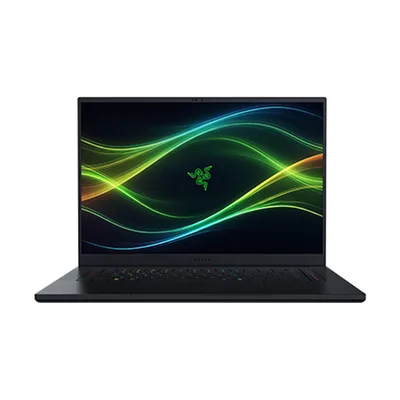
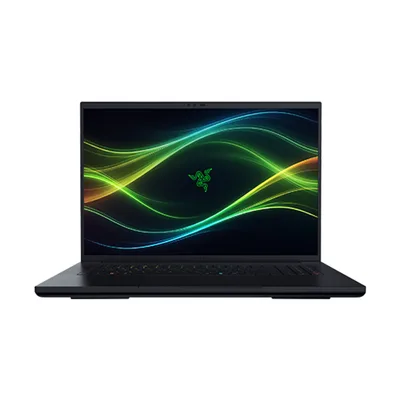
Key differences
- Screen Blade 16 wins
The Blade 16 has an OLED screen, with true blacks and rich colour, while the Blade 18 has an IPS panel. Dark scenes in films look far deeper on the OLED.
- Weight Blade 16 wins
The Blade 16 weighs 2.14 kg, while the Blade 18 weighs 3.2 kg. You'll feel the difference if it goes in your bag every day.
- Sharpness Blade 18 wins
The Blade 18 has a noticeably sharper screen, so text looks crisper and you can fit more on screen comfortably.
- Screen size Depends on you
The Blade 18 has an 18-inch screen, the Blade 16 a 16-inch one. The bigger screen is easier for spreadsheets, split-screen work and films, and the smaller one is easier to carry.
- Upgrades Blade 18 wins
Only the Blade 18 lets you add memory later, up to 128 GB. On the Blade 16, what you buy is what you keep.
- Ports Blade 18 wins
Of the two, only the Blade 18 has Ethernet, so you can plug into a wired network.
Which one should you choose?
Choose the Blade 16 if…
- you watch a lot of films or work with photos
- you want something easier to carry
- you want Windows' newest AI features to run smoothly
Choose the Blade 18 if…
- you read or write a lot on screen
- you want a bigger screen to work on
- you want to add memory later
- you want a wired connection
Full spec comparison
Both run Windows, so the choice comes down to the details. The real differences are the screen and weight.
Green cells with a ✓ mark the better spec in that row. Tick "Show differences only" to hide the rows where they match.
Performance
The Blade 16 has a much faster built-in AI chip, which speeds up Windows features like live captions, background blur and on-device AI tools.
| Spec | Razer Blade 16 (2026) | Razer Blade 18 (2026) |
|---|---|---|
| Processor | Intel Core Ultra 9 386H | Intel Core Ultra 9 290HX Plus |
| Graphics | NVIDIA GeForce RTX 5080 Laptop | NVIDIA GeForce RTX 5080 Laptop |
| Graphics memory | 16 GB | 16 GB |
| Graphics power (TGP) | 165 W | 175 W |
| AI engine (NPU) | 50 TOPS | 13 TOPS |
| Memory (RAM) | 32 GB | 32 GB |
| Memory type | LPDDR5X-9600 | DDR5-6400 |
| Maximum memory | 32 GB | 128 GB |
| Memory upgrades | Soldered (not upgradeable) | Upgradeable (slots) |
| Storage | 1 TB | 1 TB |
| Storage type | SSD | SSD |
| Storage interface | PCIe 4.0 NVMe M.2 2280 | PCIe 4.0 NVMe M.2 (dual-sided M.2 slot) |
| Storage slots | 2 | 2 |
Screen
| Spec | Razer Blade 16 (2026) | Razer Blade 18 (2026) |
|---|---|---|
| Screen size | 16" | 18" |
| Resolution | 2.5K (2560 x 1600) | 4K (3840 x 2400) |
| Aspect ratio | 16:10 | 16:10 |
| Panel | OLED | IPS |
| Refresh rate | 240 Hz | 240 Hz |
| Variable refresh (VRR) | — | Yes |
| Brightness | 500 nits | — |
| Colour range | — | 100% DCI-P3 |
| HDR | VESA DisplayHDR TrueBlack 1000 | None |
| Touchscreen | No | No |
Battery and size
| Spec | Razer Blade 16 (2026) | Razer Blade 18 (2026) |
|---|---|---|
| Battery life (maker claim) | Up to 15 hours | — |
| Battery capacity | 90 Wh | 99 Wh |
| Charger | 280 W | 400 W |
| Charges via | — | Proprietary barrel (400 W adapter); USB-C PD up to 100 W |
| Fast charging | 50% in 30 min, 80% in 48 min | 50% in 30 min, 80% in 48 min |
| Weight | 2.14 kg | 3.2 kg |
| Dimensions | 355 x 250.5 x 14.9-17.4 mm | 399.96 x 275.4 x 22.79-28.7 mm |
| Materials | CNC-milled aluminium unibody, anodised black finish with fingerprint-resistant coating | CNC-milled aluminium unibody, anodised black finish |
| Colour | Black | Black |
| Colours available | Black | Black |
Ports and wireless
| Spec | Razer Blade 16 (2026) | Razer Blade 18 (2026) |
|---|---|---|
| Ports | 1x Thunderbolt 5 (DisplayPort, power delivery - charging), 1x Thunderbolt 4 (DisplayPort, power delivery - charging), 3x USB-A 3.2 Gen 2, 1x HDMI 2.1 FRL, 1x SD card reader (UHS-II), 1x 3.5 mm combo audio | 1x Thunderbolt 5 (USB-C, DisplayPort 2.1 via dGPU, PD up to 100 W), 1x Thunderbolt 4 (USB-C, DisplayPort 2.1 via iGPU, PD up to 100 W), 3x USB 3.2 Gen 2 Type-A, 1x HDMI 2.1, 1x 2.5 Gb Ethernet (RJ-45), 1x SD card reader (UHS-II), 1x 3.5 mm combo audio, Kensington lock slot, DC power port (400 W adapter) |
| Thunderbolt / USB4 | Thunderbolt 5, Thunderbolt 4 | Thunderbolt 5 + Thunderbolt 4 |
| External displays (max) | — | 3 |
| Card reader | SD (UHS-II, 312 MB/s) | SD (UHS-II, 312 MB/s) |
| Ethernet | None | 2.5 GbE RJ-45 |
| Wi-Fi | Wi-Fi 7 | Wi-Fi 7 |
| Bluetooth | Bluetooth 6.0 | Bluetooth 5.4 |
| Mobile data | None | None |
Features
| Spec | Razer Blade 16 (2026) | Razer Blade 18 (2026) |
|---|---|---|
| Webcam | 1080p + IR | 5MP IR |
| Webcam privacy | — | physical shutter |
| Backlit keyboard | Yes | Yes |
| Keyboard | Per-key RGB Razer Chroma, 1.5 mm travel, 5 dedicated macro keys | Per-key RGB Razer Chroma, N-key rollover, 1000 Hz polling, 1.5 mm travel, membrane linear-feel |
| Login | Face | Face |
| Number pad | No | — |
| Touchpad | — | Precision glass touchpad |
| Speakers | 6-speaker system (4 upward-firing, 2 downward-firing) with Smart Amplifier, THX Spatial Audio+ | 6-speaker system (dual-force woofers, 2 tweeters), 3 smart amplifiers, THX Spatial Audio+ |
| Microphones | dual-array | built-in dual-array |
| Pen | No | No |
| Security | Windows Hello Enhanced Sign-in Security, Secured-core PC, Pluton Security Processor, TPM 2.0, BIOS administrator and user password, Kensington security slot | Windows Hello Enhanced Sign-in Security (ESS), Intel PTT (sTPM 2.0), Kensington lock slot |
Software and model
| Spec | Razer Blade 16 (2026) | Razer Blade 18 (2026) |
|---|---|---|
| Operating system | Windows 11 Home | Windows 11 Home |
| Update promise | — | None |
| Model number | RZ09-05818WN3-R3W1 | RZ09-05828WR3-R3W1 |
| Released | 2026 | 2026 |