


Apple MacBook Air 13 (M5) vs ASUS Vivobook OLED (M3407)
The biggest choice here is the system: the MacBook Air 13 runs macOS, while the Vivobook OLED runs Windows. Beyond that, for most people the Vivobook OLED is the one to get. It has an OLED screen, its battery lasts longer and it has more memory. The MacBook Air 13 makes more sense if you read or write a lot on screen.
We earn a commission from qualifying Amazon purchases made through our links, at no extra cost to you. This never affects our specs. How we make money.
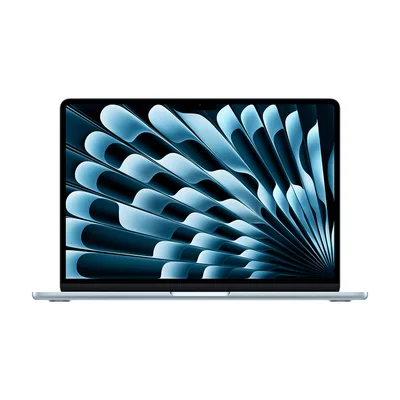
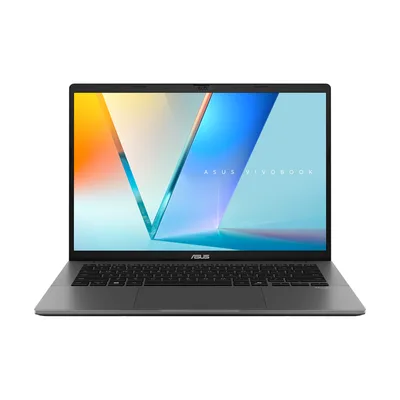
Key differences
- System Depends on you
The MacBook Air 13 runs macOS, while the Vivobook OLED runs Windows. A Mac suits iPhone owners and creative apps, while Windows runs the widest range of programs.
- Screen Vivobook OLED wins
The Vivobook OLED has an OLED screen, with true blacks and rich colour, while the MacBook Air 13 has an IPS panel. Films and photos look noticeably better on the OLED.
- Sharpness MacBook Air 13 wins
The MacBook Air 13 has a noticeably sharper screen, so text looks crisper and you can fit more on screen comfortably.
- Battery life Vivobook OLED wins
The Vivobook OLED is rated for 25 hours on a charge and the MacBook Air 13 for 18. Both figures are best cases, and real use comes in lower on each.
- Memory Vivobook OLED wins
The Vivobook OLED has 32 GB of memory, while the MacBook Air 13 has 16 GB. That helps when you keep many apps, tabs or big projects open.
- Storage Vivobook OLED wins
The Vivobook OLED has a 1 TB drive, while the MacBook Air 13 has 512 GB. With the smaller drive, more of your photos and games end up in the cloud or on a USB drive.
Which one should you choose?
Choose the MacBook Air 13 if…
- you use an iPhone and want everything to work together
- you read or write a lot on screen
- you often work near a window or outdoors
- you use a dock or fast external drives
Choose the Vivobook OLED if…
- you need Windows-only software
- you watch a lot of films or work with photos
- you work away from a socket for long stretches
- you keep lots of apps and tabs open
Full spec comparison
These two are quite different laptops. The real differences are the operating system and the screen.
Green cells with a ✓ mark the better spec in that row. Tick "Show differences only" to hide the rows where they match.
Performance
| Spec | Apple MacBook Air 13 (M5) | ASUS Vivobook OLED (M3407) |
|---|---|---|
| Processor | Apple M5 | AMD Ryzen AI 7 445 |
| Graphics | Apple M5 8-core GPU | AMD Radeon Graphics |
| AI engine (NPU) | — | 50 TOPS |
| Memory (RAM) | 16 GB | 32 GB |
| Memory type | — | DDR5 |
| Maximum memory | 16 GB | 32 GB |
| Memory upgrades | Soldered (not upgradeable) | Partly upgradeable |
| Storage | 512 GB | 1 TB |
| Storage type | SSD | SSD |
| Storage interface | — | PCIe 4.0 NVMe M.2 2280 |
| Storage slots | 0 | 1 |
Screen
The MacBook Air 13 has the brighter screen, 500 nits against 300, so it's easier to read near a window or on a train.
| Spec | Apple MacBook Air 13 (M5) | ASUS Vivobook OLED (M3407) |
|---|---|---|
| Screen size | 13.6" | 14" |
| Resolution | 2.5K (2560 x 1664) | Full HD+ (1920 x 1200) |
| Aspect ratio | — | 16:10 |
| Panel | IPS | OLED |
| Refresh rate | — | 60 Hz |
| Variable refresh (VRR) | — | No |
| Brightness | 500 nits | 300 nits |
| Colour range | Wide colour (P3) | 95% DCI-P3 |
| HDR | None | None |
| Touchscreen | No | No |
Battery and size
The MacBook Air 13 weighs 1.23 kg and the Vivobook OLED 1.4 kg, so there's little in it.
| Spec | Apple MacBook Air 13 (M5) | ASUS Vivobook OLED (M3407) |
|---|---|---|
| Battery life (maker claim) | Up to 18 hours | Up to 25 hours |
| Battery capacity | 53.8 Wh | 70 Wh |
| Charger | — | 65 W |
| Charges via | MagSafe 3 or USB-C | USB-C |
| Fast charging | Fast-charge capable with 70 W or higher USB PD power source | — |
| Weight | 1.23 kg | 1.4 kg |
| Dimensions | 304.1 x 215 x 11.3 mm | 315.2 x 223.4 x 15.9-17.9 mm |
| Materials | 100% recycled aluminium enclosure | — |
| Durability | — | US military-grade durability |
| Colour | Sky Blue | Matte Gray |
| Colours available | Sky Blue, Silver, Starlight, Midnight | Matte Gray |
Ports and wireless
Each has ports the other lacks: the MacBook Air 13 has Thunderbolt or USB4, so you can use 40 Gbps docks that run several screens and fast external drives, and the Vivobook OLED has HDMI and USB-A, so you can connect a TV or monitor and plug in USB sticks and older accessories without an adapter. The MacBook Air 13 has Wi-Fi 7, the Vivobook OLED Wi-Fi 6. The newer standard gets more out of a modern router.
| Spec | Apple MacBook Air 13 (M5) | ASUS Vivobook OLED (M3407) |
|---|---|---|
| Ports | 2x Thunderbolt 4 (USB-C; charging, DisplayPort, USB 4 up to 40Gb/s), 1x MagSafe 3 (charging), 1x 3.5 mm headphone jack | 2x USB-C 3.2 Gen 1 (charging, DisplayPort), 2x USB-A 3.2 Gen 1, 1x HDMI 2.1 TMDS, 1x 3.5 mm audio |
| Thunderbolt / USB4 | 2x Thunderbolt 4 / USB4 40Gbps | None |
| External displays (max) | 2 | — |
| Card reader | None | None |
| Ethernet | None | None |
| Wi-Fi | Wi-Fi 7 | Wi-Fi 6 |
| Wi-Fi card | Apple N1 | — |
| Bluetooth | Bluetooth 6 | Bluetooth 5.4 |
| Mobile data | None | None |
Features
| Spec | Apple MacBook Air 13 (M5) | ASUS Vivobook OLED (M3407) |
|---|---|---|
| Webcam | 1080p | 1080p + IR |
| Webcam privacy | — | physical shutter |
| Backlit keyboard | Yes | Yes |
| Keyboard | backlit Magic Keyboard, 78 ANSI or 79 ISO keys, 12 full-height function keys, ambient light sensor | backlit chiclet, 1.7 mm key travel |
| Login | Fingerprint | Face |
| Number pad | No | No |
| Touchpad | Force Touch trackpad with pressure sensing and Multi-Touch gestures | precision touchpad |
| Speakers | four-speaker sound system with Spatial Audio and Dolby Atmos | built-in speakers, Dolby Atmos |
| Microphones | three-mic array with directional beamforming | built-in array microphone |
| Pen | No | No |
| Security | Touch ID | Microsoft Pluton |
Software and model
| Spec | Apple MacBook Air 13 (M5) | ASUS Vivobook OLED (M3407) |
|---|---|---|
| Operating system | macOS | Windows 11 Home |
| Model number | MDHH4B/A | M3407GA-SF003W |
| Released | 2026 | 2026 |